

HKMA launches next phase of CBDC pilot and sandbox
Hong Kong project will explore programmability, tokenisation and atomic settlement
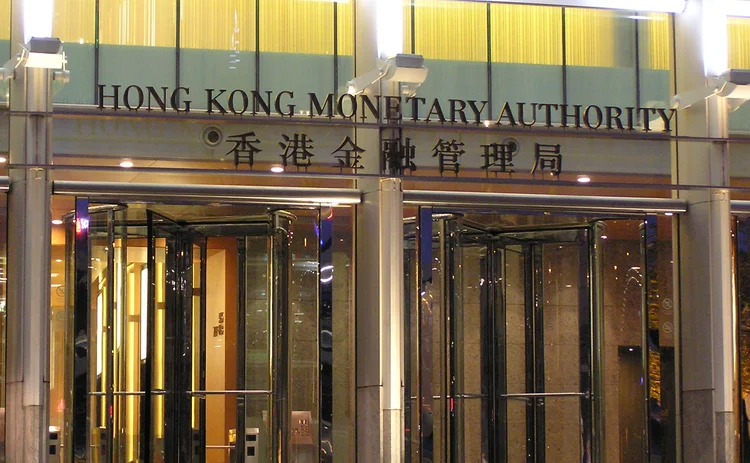
The Hong Kong Monetary Authority launched the second phase of its retail central bank digital currency (CBDC) pilot and a regulatory sandbox for stablecoin projects.
The HKMA completed the first phase of its pilot retail CBDC, called the e-Hong Kong dollar (e-HKD), in October 2023, working with 16 private firms. That phase tested retail use cases including offline and programmable payments, tokenised deposits and settling both Web3 transactions and tokenised assets.
The second phase will explore areas where an e-HKD could “add unique value”. These include programmability, tokenisation and atomic settlement, it said in a statement today (March 14). It will also explore new use cases that have not yet been covered in the previous phase.
Participants will use an “enhanced e-HKD sandbox” to test and develop the various use cases. The sandbox will also support their research into the e-HKD’s interoperability with other forms of tokenised money, and the interbank settlement between them.
The HKMA said the enhanced sandbox will leverage a wholesale CBDC sandbox it plans to build under Project Ensemble, a project it launched last week. Organisations interested in joining the retail CBDC pilot must apply before 17 May 2024.
The pilot’s result, together with the CBDC expert group’s research, will inform official decisions on issuing an e-HKD. The CBDC expert group, consisting of 12 academics, was formed in October 2023.
Stablecoin sandbox
The HKMA also launched a regulatory sandbox for potential stablecoin issuers, it announced on March 12.
Participants must have a reasonable business plan for issuing stablecoins Hong Kong. They must also show a reasonable prospect of complying with regulations proposed by the HKMA and Hong Kong’s Financial Services and the Treasury Bureau (FSTB).
On December 27, the HKMA and the FSTB, which is effectively Hong Kong’s finance ministry, proposed a stricter stablecoin regulation regime in a consultation paper.
The HKMA said it will use the sandbox to communicate its supervisory expectations to possible stablecoin firms, and collect feedback from them.
Deputy chief executive Darryl Chan said in an article that it has not set a limit on the number of sandbox participants.
Proposed stablecoin regime
Under the authorities’ current proposals, any licensed currency-based stablecoin issuers would have to hold reserves equivalent to the value of the stablecoins in circulation “at all times”.
Issuers would also have to segregate their reserves from their other assets, and have liquidity risk management practices able to withstand a run. They would be obliged to “regularly” publicly disclose the total amount of the stablecoin in circulation, the mark-to-market value of reserve assets and their composition.
The HKMA has warned stablecoins based on arbitrage or an algorithm will probably fail to meet the proposed licensing criteria, especially on reserves management.
Chan said authorities had received over 100 responses in the public consultation that ended in February. The HKMA and the FSTB are studying the responses and will publish their conclusions as soon as practicable.
Only users who have a paid subscription or are part of a corporate subscription are able to print or copy content.
To access these options, along with all other subscription benefits, please contact info@centralbanking.com or view our subscription options here: subscriptions.centralbanking.com/subscribe
You are currently unable to print this content. Please contact info@centralbanking.com to find out more.
You are currently unable to copy this content. Please contact info@centralbanking.com to find out more.
Copyright Infopro Digital Limited. All rights reserved.
As outlined in our terms and conditions, https://www.infopro-digital.com/terms-and-conditions/subscriptions/ (point 2.4), printing is limited to a single copy.
If you would like to purchase additional rights please email info@centralbanking.com test test test
Copyright Infopro Digital Limited. All rights reserved.
You may share this content using our article tools. As outlined in our terms and conditions, https://www.infopro-digital.com/terms-and-conditions/subscriptions/ (clause 2.4), an Authorised User may only make one copy of the materials for their own personal use. You must also comply with the restrictions in clause 2.5.
If you would like to purchase additional rights please email info@centralbanking.com test test test
More on Currency

Nigeria to discourage cash withdrawals and make deposits easier
Central bank says reform package aims to reduce cash usage and tackle money laundering

Hedge funds cut BoJ bets after torrid year in yen rates
Dealers see lighter positioning after shock October election saw more than $300m of losses, compounding April’s pain

Cash is the tender of last resort – panel
Officials at Central Banking Autumn Meetings discuss risks of long-term outages in era of digital payments

Support for euro hits ‘record highs’ – ECB
Previously sceptical countries have grown to like shared currency, research suggests

South Sudan opens new currency centre as UN warns of looming war
Efforts to decentralise ops come after General Assembly hears that political transition is ‘falling apart’

Taiwan’s central bank seeks oversight over stablecoin issuance
Deputy governor says potentially volatile assets could affect financial stability

Interesting developments in currency denomination structures
Antti Heinonen explores recent changes in currency structures and the reasons behind them

Do BIS volumes soar past the trend?
Average daily FX volumes have surged to $9.6 trillion in latest triennial survey, but are these figures representative?